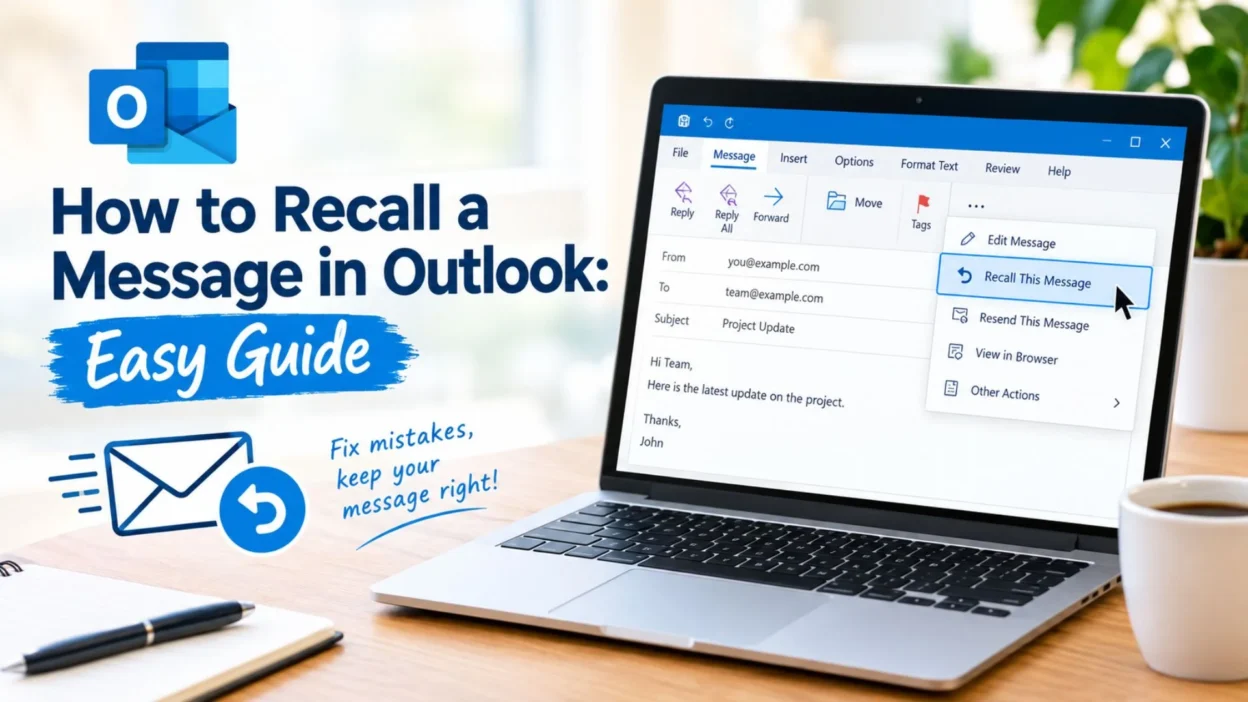
Sending an email and immediately realizing there is a mistake can be stressful. Maybe you sent the message to the wrong person, forgot an important attachment, or noticed an error just seconds after clicking Send. Fortunately, Outlook offers a recall feature that may let you retrieve the message or replace it with a corrected version.
If you are wondering how to recall a message in Outlook, the process is fairly simple, although it depends on the type of Outlook account and the recipient’s email setup. A recall is not guaranteed in every situation, so knowing the basic requirements can save you time and frustration.
This guide explains the process in simple steps and also covers useful message ideas for situations where you need to apologize, clarify, or correct an email. Whether you use Outlook for work, school, or everyday communication, these tips can help you handle an accidental email with confidence.
Top How to Recall a Message in Outlook
If you need to act quickly after sending an email, these practical steps can help you understand the recall process.
- Open Outlook and go to your Sent Items folder.
- Find and open the email you want to recall.
- Make sure the message is opened in its own window rather than only previewed in the reading pane.
- Look for the recall option under the message or actions menu.
- Select the option to recall the message if it is available.
- Outlook may give you the choice to delete unread copies or replace the email with a corrected version.
- Choose the option that matches what you need to do.
- If you replace the email, make your corrections carefully before sending it again.
- You may also receive a notification showing whether the recall was successful.
- Remember that recalling an email does not always guarantee that the recipient will never see it.
- Acting quickly gives you the best chance of correcting an accidental message.
- Before recalling an email, check that you have selected the correct message from Sent Items.
Short How to Recall a Message in Outlook Tips
Sometimes you only need the essential steps. These quick reminders can help when you are trying to correct an email without wasting time.
- Open Sent Items and select the email you want to recall.
- Open the sent message fully to access its available actions.
- Choose the recall option from the message actions.
- Select whether you want to delete or replace the message.
- If replacing it, edit the original content before sending the corrected version.
- Check your recipient list before sending the replacement.
- Move quickly because the recipient may open the email at any moment.
- Do not assume every sent Outlook email can be recalled.
- A recall may work differently depending on your Outlook environment.
- If the recall fails, send a short correction email instead.
- Keep your correction polite and direct.
- Avoid sending several confusing follow-up messages.
- If an attachment was missing, attach it to the corrected email.
- If the mistake involved incorrect information, clearly provide the corrected details.
- When the email contained sensitive information, contact the recipient promptly if needed.
Best How to Recall a Message in Outlook Advice
Knowing how to recall a message in Outlook is useful, but understanding what to do afterward is just as important. A calm correction can make an awkward situation much easier.
- Act immediately when you notice the mistake.
- Check whether the email is still unread before assuming the recall worked.
- Use the replacement option when the original message needs substantial correction.
- Keep the corrected version clear and professional.
- Double-check names, addresses, dates, attachments, and important details.
- If the recall does not work, do not panic.
- Send a brief follow-up explaining that the previous email should be disregarded.
- If you accidentally sent an unfinished draft, acknowledge the mistake without overexplaining.
- If you forgot an attachment, simply send it with a helpful note.
- If the error was minor, a simple correction may be better than creating unnecessary confusion.
- Avoid blaming Outlook or the recipient for the mistake.
- Keep your follow-up focused on the information that needs to be corrected.
- Review your message carefully before sending the replacement.
- When possible, use a short delay in future emails to give yourself time to catch mistakes.
- Treat an unsuccessful recall as a reminder to review important emails before pressing Send.
One-Line How to Recall a Message in Outlook Reminders
These quick lines are useful when you need a simple reminder of what to check after sending an email.
- Check Sent Items first when you need to recall a message in Outlook.
- Open the sent email fully before looking for the recall option.
- Act quickly because an opened email may be harder to correct.
- Recall is useful, but it is not guaranteed in every situation.
- Choose delete or replace based on what went wrong.
- Always proofread the replacement before sending it.
- A failed recall can still be followed by a polite correction email.
- Check the recipient before sending any replacement message.
- Missing an attachment is fixable with a quick follow-up.
- A simple apology can make an accidental email less awkward.
- Stay calm and correct the information clearly.
- Review important emails before sending whenever possible.
- Use a short correction instead of a long explanation.
- Save useful correction phrases for future email mistakes.
- The faster you respond, the easier it may be to manage an accidental email
Best How to Recall a Message in Outlook for Common Situations
Once you know the basic recall process, the next step is knowing how to handle different email mistakes. These practical approaches can help you respond without making the situation more complicated.
- If you sent the email to the wrong person, try recalling it as soon as possible.
- If the email contains incorrect information, replace it with a corrected version when the recall option allows it.
- If you forgot an attachment, recall the message if possible and prepare a new version with the file included.
- If you accidentally sent an unfinished draft, a quick recall followed by a polished version can make the mistake less noticeable.
- If you used the wrong subject line, replace the message with the correct subject when that option is available.
- If you accidentally included the wrong recipient, act quickly rather than waiting for the message to be opened.
- If you sent confidential information by mistake, consider contacting the recipient directly instead of relying only on recall.
- If the recall fails, send a short message asking the recipient to disregard the previous email.
- If the original email contained a small typo, decide whether a correction is necessary before sending another message.
- If the mistake could affect work or deadlines, make the corrected information easy to identify.
Recall an Outlook Message Before It Is Read
Timing can make a major difference when you want to recall an email. If the recipient has not opened the message, you may have a better chance of correcting the situation.
- Open your Sent Items folder and locate the email.
- Open the message and look for the available recall command.
- Select the option to recall the message.
- Choose the option to remove the unread copy if that is what you need.
- If the email needs corrections, use the replacement option when available.
- Review the replacement carefully before sending it.
- Confirm the recipients one more time.
- Check that the subject and attachments are correct.
- Send the corrected version only after reviewing the entire message.
- Keep in mind that recall availability depends on your Outlook setup and the recipient’s email environment.
- Do not assume that an unread message will automatically disappear in every situation.
- Watch for Outlook’s recall notification so you know whether the attempt succeeded.
What to Do When Outlook Message Recall Fails
A failed recall does not mean you have to leave the mistake unresolved. In many cases, a clear follow-up message is the simplest solution.
- Stay calm and avoid sending several follow-up emails at once.
- Send a brief correction as soon as possible.
- Tell the recipient that the previous message should be disregarded.
- If you provided incorrect information, clearly state the correct information.
- If you forgot an attachment, send it in the next email.
- If you used the wrong wording, provide the intended message without unnecessary details.
- If the email went to the wrong person, politely ask them to disregard it.
- If sensitive information was involved, take the appropriate next steps promptly.
- Avoid making the situation sound more serious than necessary.
- Keep your correction professional and straightforward.
- Do not repeatedly attempt recalls without checking what happened.
- Review the final email before sending another message.
- If the mistake affects a workplace task, make sure the correct information reaches everyone who needs it.
- A short and confident correction often works better than a lengthy explanation.
Simple Messages After an Email Mistake
Sometimes the best response after a failed recall is a short correction message. These examples can help you acknowledge the mistake without making the situation awkward.
- Please disregard my previous email. I’m sending the corrected information here.
- Sorry for the confusion. Please use this updated version instead.
- Please ignore my earlier message and refer to the information below.
- I noticed an error in my previous email. Here is the corrected information.
- Apologies for the mistake. Please see the updated details below.
- I sent the previous message in error. Please disregard it.
- Sorry about that. I’ve corrected the information in this email.
- Please disregard the earlier version and use this updated copy.
- I noticed that an attachment was missing from my previous email. I’ve included it here.
- Apologies for the confusion. The correct information is provided below.
- Please use this message as the updated version of my previous email.
- I made a small error in my last message. Here is the corrected version.
- Sorry about the mix-up. Please refer to this email instead.
- Please disregard my previous message while I correct the details.
- Thank you for your understanding. Please use the updated information below.
Copy-Paste Ready Outlook Correction Messages
When you need something you can send immediately, these short messages keep the tone polite, professional, and natural.
- Please disregard my previous email. I noticed an error and have provided the corrected information below.
- Sorry for the confusion. I sent an incorrect version earlier. Please use this updated message instead.
- Apologies for the mistake in my previous email. Please refer to the corrected details below.
- Please ignore my earlier message. I’ve reviewed the information and included the correct version here.
- I apologize for the mix-up. Please consider my previous email replaced by this updated message.
- Sorry about the earlier email. I noticed an error and wanted to send you the corrected information.
- Please disregard the previous message, as it contained an error. Thank you for your understanding.
- Apologies for the missing attachment in my previous email. I’ve attached the correct file here.
- I noticed that I sent the wrong information earlier. Please use the details in this email instead.
- Sorry for sending the earlier message by mistake. Please disregard it and refer to this email.
- Please use this updated version instead of my previous email. I apologize for any confusion.
- I’ve corrected the information from my earlier message. Please refer to this version going forward.
- Sorry for the oversight. The information below reflects the correct details.
- Please disregard my previous email while I correct the information. Thank you for your patience.
- Apologies for the confusion caused by my earlier message. Please consider this the corrected version.
Best Messages for Email Corrections and Updates
These short messages can help when recalling an email does not work or when you simply need to send a clear replacement.
- Please disregard my previous email. The information in this message is correct.
- I’m sorry for the confusion. Please use this updated email instead.
- Please ignore my earlier message and refer to this corrected version.
- I noticed an error after sending my previous email. The correct details are below.
- Apologies for the mistake. Please consider this the updated version.
- Please disregard the earlier email, as it was sent with incorrect information.
- Sorry for the mix-up. I’ve corrected the details in this message.
- My previous email contained an error. Please use this version going forward.
- Please ignore my earlier message. I’ve included the correct information here.
- Apologies for the confusion caused by my previous email.
- I sent the earlier message by mistake. Please disregard it.
- Please use this email as the corrected version of my previous message.
- Sorry about the error. The updated information is included below.
- Please disregard the previous email and refer to this message instead.
- I’ve corrected the mistake from my earlier email. Thank you for your understanding.
How to Avoid Needing to Recall an Outlook Message
Although knowing how to recall a message in Outlook can be helpful, preventing mistakes before they happen is even better. A few simple habits can reduce the chances of sending an email you later regret.
- Review the recipient list before clicking Send.
- Double-check similar names to make sure the email goes to the right person.
- Confirm that all important attachments are included.
- Read the subject line before sending the message.
- Take a moment to review dates, names, and important details.
- Make sure the email is complete and not an unfinished draft.
- Check your tone before sending an emotional or sensitive message.
- Avoid rushing through important work emails.
- Read the message one final time from the recipient’s point of view.
- Make corrections before clicking Send whenever possible.
- Use a delay option if your Outlook version and account settings support one.
- Keep important emails short and organized so mistakes are easier to spot.
- Avoid replying too quickly when you are distracted or frustrated.
- Save the message as a draft if you need more time to review it.
- Develop a habit of checking attachments and recipients before every important email.
FAQ About How to Recall a Message in Outlook
Can I recall any email I send in Outlook?
Not every email can be recalled. Whether the feature works depends on your Outlook account, the recipient’s account, and whether the message has already been opened or processed.
How do I recall a message in Outlook after sending it?
Go to Sent Items, open the message you want to recall, and look for the recall option in the available message actions. You may be able to delete the unread copy or replace it with a corrected email.
Can I recall an Outlook message after the recipient reads it?
A recall may not work as intended once the recipient has opened the message. In that situation, sending a polite correction or clarification is usually the better option.
What happens if Outlook message recall fails?
The original email may remain available to the recipient. You can then send a follow-up message asking them to disregard the earlier email and providing the correct information.
Can I replace a recalled message with a corrected email?
In some Outlook environments, the recall process allows you to replace the original message with a new version. Always review the replacement carefully before sending it.
Conclusion
Learning how to recall a message in Outlook can save you from an uncomfortable situation when an email is sent too soon, goes to the wrong person, contains incorrect information, or is missing an attachment. However, message recall is not always guaranteed, which is why knowing how to send a clear correction is equally important.
The best approach is to act quickly, check whether the recall option is available, and send a corrected version when necessary. If the recall does not work, there is no need to panic. A short, polite follow-up can usually clear up the mistake and make sure the recipient receives the right information.
Most importantly, take a few extra seconds to review your recipient list, subject line, message, and attachments before clicking Send. Knowing how to recall a message in Outlook is useful, but careful checking can help prevent the problem in the first place.

Ryan Mitchell is a professional content writer who specializes in creating heartfelt messages, wishes, greetings, and inspirational quotes for every occasion. He is passionate about helping readers express their thoughts and emotions through meaningful, engaging, and easy-to-share content.